
We realize new development possibilities utilizing the ultimate safety technology required in the space environment.
Created: 2023-07-16
Updated: 2025-09-06

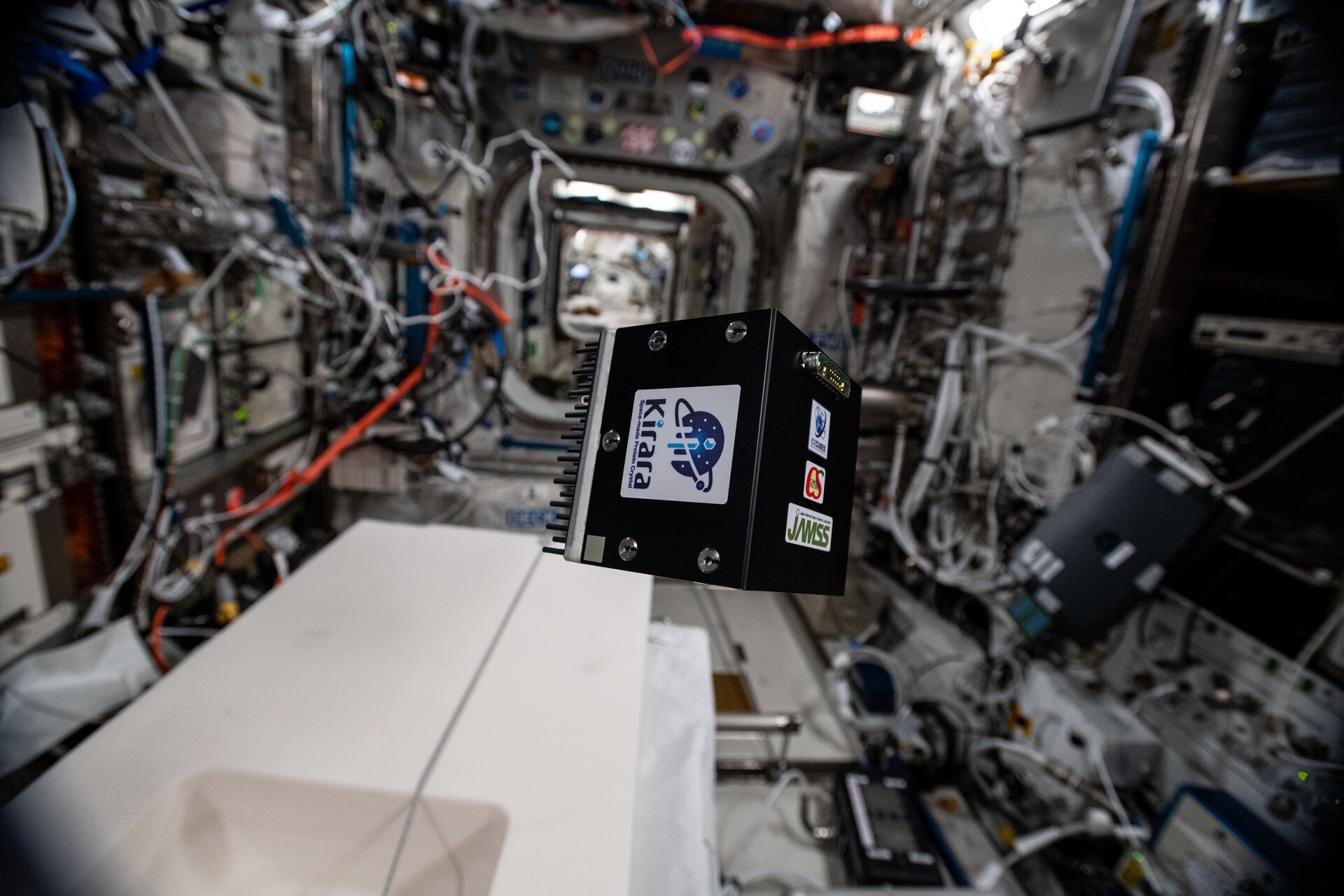
Product/Service - Kirara
- Classification
- Miscellaneous
- Category
- Microgravity Research Payloads
Microgravity Science
Microgravity Flight Service (LEO)
- Status
- Active
- First launch
- 2019
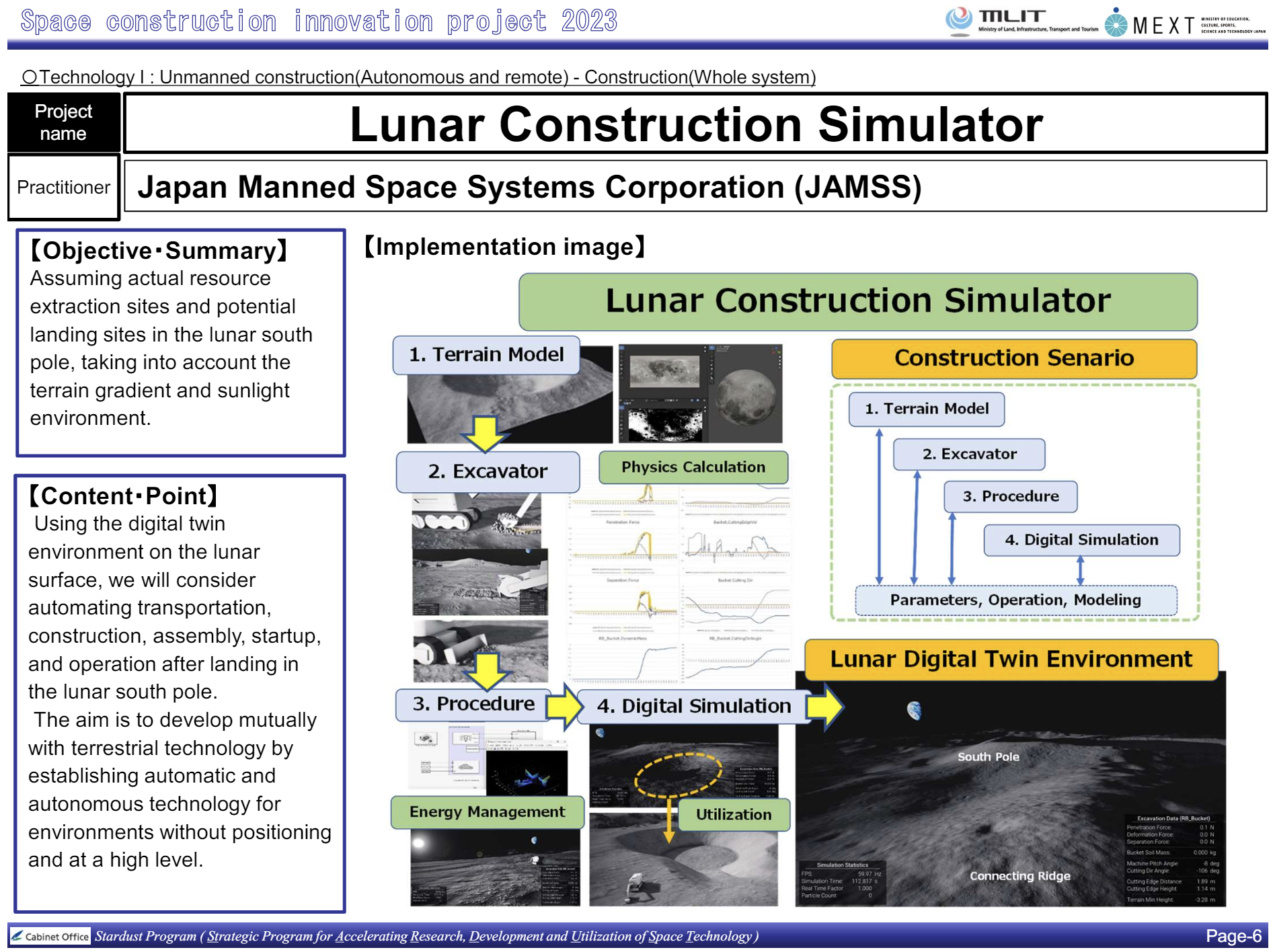
Japan's Space construction innovation project, 2021-2025
- Lunar Construction Simulator
- Assuming actual resource extraction sites and potential landing sites in the lunar south pole, taking into account the terrain gradient and sunlight environment.
- Using the digital twin environment on the lunar surface, we will consider automating transportation, construction, assembly, startup, and operation after landing in the lunar south pole. The aim is to develop mutually with terrestrial technology by establishing automatic and autonomous technology for environments without positioning and at a high level.
- Technology classification: Construction (Whole system)
Kirara#6 will be launched to the ISS in April 2025.
- In Japan, TANAKA MIRAI Lab. of TANAKA PRECIOUS METAL GROUP Co., Ltd. will demonstrate its proprietary crystallization technologies in space.
- From overseas, the HUN-REN Research Centre for Natural Sciences (Hungary), under the coordination of Hungarian to Orbit, HUNOR—the national body overseeing space programs—will conduct space experiments for the first time.
- Returning for a third mission, the Korea Basic Science Institute (KBSI) will send new samples to further validate findings obtained during the previous Kirara flight.
- From academia, Nagoya City University (Japan) will also participate continuously, contributing to the growing body of space-based research utilizing Kirara.
- Kirara continues to evolve as a model for next-generation space-based manufacturing, providing access to the unique advantages of microgravity for cutting-edge scientific and industrial applications.
- Announced that Japan Manned Space Systems Corporation (JAMSS), Interstellar Lab, and Exobiosphere as the latest payload partners for its Haven-1 Lab.
- The new partners will leverage the microgravity environment of the Haven-1 Lab by installing payloads focused in the areas of advanced materials development, biotechnology, and pharmaceutical development.
- JAMSS will develop a multi-purpose payload facility that accommodates microgravity experiments and small payload modules. These sub-payloads include devices for colloidal photonic crystallization (a process for developing advanced optical materials), interfaces for commercial merchandise items, and many other applications.
Similar Organizations
Commercial Space Station, Reusable Satellite, Microgravity Flight Service (Reusable Satellite), Microgravity Research Payloads, Microgravity Flight Service (LEO)

Development
Microgravity Research Payloads, Space Situational Awareness (SSA)

Active
Bioreactor Express
Microgravity Flight Service (LEO), Microgravity Research Payloads, ISS Utilization Service

Active
Miscellaneous, Microgravity Research Payloads

Active
Space Medicine, Microgravity Research Payloads

Development
KURO
Microgravity Research Payloads, Microgravity Workspaces, Microgravity Science, Microgravity Simulation, In-Space Manufacturing

Development, ?
SpaceLAB
ISS Utilization Service, Microgravity Research Payloads, Microgravity Flight Service (LEO)

Demonstrated
Microgravity Flight Service (LEO), Microgravity Research Payloads, Space Laboratory Equipment

Demonstrated, Launched
GEN
Transport Service (Re-Entry), Microgravity Flight Service (LEO), Microgravity Research Payloads
Development
ISAAC
Microgravity Flight Service (Suborbital), Microgravity Research Payloads

Development
Microgravity Flight Service (LEO), Microgravity Research Payloads

Development
Microgravity Flight Service (LEO), In-Space Manufacturing, Microgravity Research Payloads

Development, Launched
SpaceLAB
Microgravity Flight Service (LEO), Microgravity Research Payloads, Space Laboratory Equipment

Development
Microgravity Flight Service (LEO), Microgravity Research Payloads, Consulting Service

Demonstrated
Life Sciences Platform
Microgravity Research Payloads, ISS Utilization Service, Microgravity Flight Service (LEO)

Early stage
Microgravity Science, Microgravity Research Payloads, Microgravity Simulation

Development
NanoLab, Bishop
ISS Utilization Service, Microgravity Flight Service (LEO), Commercial ISS Airlock, Microgravity Research Payloads

Active
Microgravity Flight Service (LEO), Microgravity Science, Microgravity Research Payloads

Dormant
MUSA
Microgravity Flight Service (Suborbital), Microgravity Research Payloads

Development
Faraday
ISS Utilization Service, Microgravity Research Payloads

Demonstrated
PIL-BOX, Industrial Crystallizer
In-Space Manufacturing, Microgravity Research Payloads

Demonstrated
3D BioFabrication Facility (BFF), 3D-BioSystem Facility
In-Space Manufacturing, Microgravity Research Payloads
Demonstrated
Microgravity Flight Service (LEO), Microgravity Research Payloads, Microgravity Flight Service (Suborbital)

Development
Microgravity Science, Microgravity Research Payloads

Demonstrated
ICE Cubes, Lunar Payload Delivery Service (LPDS)
ISS Utilization Service, Lunar Payload Delivery Service, Microgravity Flight Service (LEO), Microgravity Research Payloads
.jpg "Space Applications Services`(ICE Cubes)")
Active, Development
BARNACLE DOT, INDY DOT
Microgravity Flight Service (LEO), Microgravity Research Payloads

Demonstrated, Launched, Pivot, Cancelled
Microgravity Flight Service (LEO), Microgravity Research Payloads

Development
Microgravity Flight Service (LEO), Microgravity Research Payloads

Dormant
Microgravity Flight Service (LEO), Microgravity Flight Service (Reusable Satellite), Robotic Space Station, Microgravity Research Payloads, In-Space Manufacturing, Orbital Transportation, Transport Service (LEO-GEO)

Development
MaRVIn
Microgravity Research Payloads, Microgravity Flight Service (LEO), Microgravity Science

Active
MUSES (Multi-User System for Earth Sensing)
ISS Utilization Service, Microgravity Flight Service (LEO), Hardware, Microgravity Research Payloads

Active
Space-Lab, AsteriX Lab
Microgravity Flight Service (LEO), Microgravity Research Payloads, Commercial Space Station

Early stage
Miscellaneous, In-Space Manufacturing, Microgravity Science

Launched
yotta
Microgravity Science

Development
Carousel Spacelab
Active Debris Removal (ADR), Microgravity Flight Service (LEO), Microgravity Science

Dormant, Early stage
KURO
Microgravity Research Payloads, Microgravity Workspaces, Microgravity Science, Microgravity Simulation, In-Space Manufacturing
Development, ?
Microgravity Workspaces, Microgravity Science, ISS Utilization Service, Medical Support

Early stage
Microgravity Science, Microgravity Research Payloads, Microgravity Simulation
Development
Microgravity Science, In-Space Manufacturing

Demonstrated
Microgravity Flight Service (LEO), Microgravity Science, Microgravity Research Payloads
Dormant
TETRANITE
Microgravity Science

Demonstrated
Microgravity Science, Microgravity Research Payloads
Demonstrated
BioFoundry
Microgravity Science, Microgravity Simulation

Dormant, Active
SPACTORY
Microgravity Flight Service (LEO), ISS Utilization Service, Microgravity Science

Demonstrated, Active
MaRVIn
Microgravity Research Payloads, Microgravity Flight Service (LEO), Microgravity Science
Active
ScienceTaxi
Microgravity Flight Service (LEO), ISS Utilization Service, Hardware, Microgravity Science

Active
Transport Service (Re-Entry), Microgravity Flight Service (LEO), Microgravity Workspaces

Cancelled, Development
Pioneer-class Space Station, Voyager-class Space Station
In-Space Manufacturing, Commercial Space Station, Microgravity Flight Service (LEO), Robotic Space Station

Development
Bartolomeo
ISS Utilization Service, Microgravity Flight Service (LEO)

Active
Commercial Space Station, Reusable Satellite, Microgravity Flight Service (Reusable Satellite), Microgravity Research Payloads, Microgravity Flight Service (LEO)
Development
The Port, The Cutter
Microgravity Flight Service (LEO), In-Space Assembly, Robotic Space Station, Persistent Platform, On-Orbit Servicing

Development
Inflatable Atmospheric Decelerator (IAD), Space Return Service, Phoenix
Transport Service (Re-Entry), In-Space Manufacturing, Microgravity Flight Service (LEO), Microgravity Flight Service (Reusable Satellite), Point-to-point

Development, Launched
Bioreactor Express
Microgravity Flight Service (LEO), Microgravity Research Payloads, ISS Utilization Service
Active
ReX, Cosmotron
Microgravity Flight Service (LEO), Transport Service (Re-Entry)

Development, Launched
Transport Service (Re-Entry), Microgravity Flight Service (LEO), Microgravity Flight Service (Reusable Satellite)

Dormant
Ecos
In-Space Manufacturing, Hardware, Medical Support, Microgravity Flight Service (LEO)

Demonstrated
ELS-R, ELS-RS
Microgravity Flight Service (LEO), Microgravity Flight Service (Reusable Satellite), Transport Service (Re-Entry)

Development
Microgravity Flight Service (LEO), In-Orbit Computing

Development
Carousel Spacelab
Active Debris Removal (ADR), Microgravity Flight Service (LEO), Microgravity Science
Dormant, Early stage
Foton Spacecraft
Foton
Microgravity Flight Service (LEO), Transport Service (Re-Entry)

Retired
SpaceLAB
ISS Utilization Service, Microgravity Research Payloads, Microgravity Flight Service (LEO)
Demonstrated
FSW
Microgravity Flight Service (LEO), Microgravity Flight Service (Reusable Satellite), Reusable Satellite, Recoverable Satellite, Returnable Satellite

Demonstrated
Microgravity Flight Service (LEO)

Dormant
Microgravity Flight Service (LEO), Microgravity Research Payloads, Space Laboratory Equipment
Demonstrated, Launched
GEN
Transport Service (Re-Entry), Microgravity Flight Service (LEO), Microgravity Research Payloads
Development
Microgravity Flight Service (LEO), Microgravity Research Payloads
Development
Microgravity Flight Service (LEO), In-Space Manufacturing, Microgravity Research Payloads
Development, Launched
Microgravity Flight Service (Suborbital), Microgravity Flight Service (LEO)

Dormant
SpaceLAB
Microgravity Flight Service (LEO), Microgravity Research Payloads, Space Laboratory Equipment
Development
Retriever, Resource Exchange Module (REX)
Transport Service (Re-Entry), Microgravity Flight Service (LEO), Microgravity Flight Service (Reusable Satellite), Persistent Platform, Robotic Space Station, In-Space Logistics

Development
Phoenix Orbital Transfer Vehicle
In-Space Manufacturing, Orbital Transportation, Space Tug, Microgravity Flight Service (LEO)

Concept
Transport Service (Re-Entry), Microgravity Flight Service (LEO), In-Space Manufacturing, Space Construction Company

Early stage
Zephyr, URV (Universal Re-entry Vechicle)
Transport Service (Re-Entry), Microgravity Flight Service (Reusable Satellite), Microgravity Flight Service (LEO)

Development
Ray, Arc
Transport Service (Re-Entry), In-Space Manufacturing, Microgravity Flight Service (LEO), Microgravity Flight Service (Reusable Satellite)

Development, Launched
Microgravity Flight Service (LEO), Microgravity Research Payloads, Consulting Service
Demonstrated
HSRC (HTV Small Re-entry Capsule), HTV, HTV-X
Transport Service (Re-Entry), Transport Service (Earth-LEO), Microgravity Flight Service (LEO), Lunar Lander

Demonstrated
Life Sciences Platform
Microgravity Research Payloads, ISS Utilization Service, Microgravity Flight Service (LEO)
Early stage
In-Space Manufacturing, Microgravity Flight Service (LEO), Transport Service (Re-Entry)

Development
Messerschmitt-Bolkow-Blohm
SPAS (Space Pallet Satellite), Saenger, Sänger
Microgravity Flight Service (LEO), Microgravity Flight Service (Reusable Satellite), Reusable Satellite, Point-to-point, Transport Service (Earth-LEO), Robotic Space Station

Cancelled, Acquired
NanoLab, Bishop
ISS Utilization Service, Microgravity Flight Service (LEO), Commercial ISS Airlock, Microgravity Research Payloads
Active
Microgravity Flight Service (LEO), Microgravity Science, Microgravity Research Payloads
Dormant
Kestrel
Microgravity Flight Service (LEO), Reusable Satellite, Commercial Space Station, Robotic Space Station, In-Space Platform, Persistent Platform, Transport Service (Re-Entry)

Development
Ferry, Cargo Ferry, Carryall
In-Space Manufacturing, Transport Service (Earth-LEO), Transport Service (Re-Entry), Microgravity Flight Service (LEO)

Development, Launched
Radian One
Transport Service (Earth-LEO), Microgravity Flight Service (LEO), Microgravity Flight Service (Reusable Satellite), Human Spaceflight, Transport Service (Re-Entry)

Development
Transport Service (Re-Entry), Microgravity Flight Service (LEO)

Early stage
In-Space Manufacturing, Transport Service (Re-Entry), Microgravity Flight Service (LEO)

Cancelled
Transport Service (Re-Entry), Microgravity Flight Service (Reusable Satellite), Microgravity Flight Service (LEO), In-Space Manufacturing

Dormant, Early stage
Microgravity Flight Service (LEO), Microgravity Flight Service (Reusable Satellite), Transport Service (Re-Entry)

Development, ?
Microgravity Flight Service (LEO), Microgravity Research Payloads, Microgravity Flight Service (Suborbital)
Development
ARGO
Microgravity Flight Service (Reusable Satellite), Transport Service (Re-Entry), Microgravity Flight Service (LEO), Transport Service (Earth-LEO)

Concept, Development
ICE Cubes, Lunar Payload Delivery Service (LPDS)
ISS Utilization Service, Lunar Payload Delivery Service, Microgravity Flight Service (LEO), Microgravity Research Payloads
Active, Development
ISS Utilization Service, Microgravity Flight Service (LEO), In-Space Production, In-Space Manufacturing

Active
REV1
ISS Utilization Service, Microgravity Flight Service (LEO), Microgravity Flight Service (Reusable Satellite), Transport Service (Re-Entry)

Development
BARNACLE DOT, INDY DOT
Microgravity Flight Service (LEO), Microgravity Research Payloads
Demonstrated, Launched, Pivot, Cancelled
ForgeStar, Aether
Microgravity Flight Service (LEO), Microgravity Flight Service (Reusable Satellite), In-Space Manufacturing, Transport Service (Re-Entry)

Development, Launched
Space Pocket
Microgravity Flight Service (LEO), ISS Utilization Service

Demonstrated
Space Rider
Microgravity Flight Service (LEO), Microgravity Flight Service (Reusable Satellite)

Development
TangoLab, CubeLabs, Mambo
ISS Utilization Service, Microgravity Flight Service (LEO), Microgravity Flight Service (Reusable Satellite)

Active
ST-42
ISS Utilization Service, Microgravity Flight Service (LEO), Microgravity Flight Service (Reusable Satellite)
Cancelled, ?
Microgravity Flight Service (LEO)

Early stage, ?
Microgravity Flight Service (LEO), Microgravity Flight Service (Reusable Satellite)

Demonstrated
SPACTORY
Microgravity Flight Service (LEO), ISS Utilization Service, Microgravity Science
Demonstrated, Active
RED-25, RED-DATA2, RED-XR
Transport Service (Re-Entry), Microgravity Flight Service (LEO)

Launched, Demonstrated, Development
DragonLab
Microgravity Flight Service (LEO), Microgravity Flight Service (Reusable Satellite)

Dormant
Microgravity Flight Service (LEO), Microgravity Research Payloads
Development
Microgravity Flight Service (LEO), Microgravity Research Payloads
Dormant
Microgravity Flight Service (LEO), Microgravity Flight Service (Reusable Satellite), Robotic Space Station, Microgravity Research Payloads, In-Space Manufacturing, Orbital Transportation, Transport Service (LEO-GEO)
Development
Transport Service (Re-Entry), Microgravity Flight Service (LEO), Microgravity Flight Service (Reusable Satellite), Point-to-point

Development
MaRVIn
Microgravity Research Payloads, Microgravity Flight Service (LEO), Microgravity Science
Active
MUSES (Multi-User System for Earth Sensing)
ISS Utilization Service, Microgravity Flight Service (LEO), Hardware, Microgravity Research Payloads
Active
Microgravity Flight Service (LEO), Launch Service Brokerer

Active
Nyx
Transport Service (Earth-LEO), Transport Service (LEO-Moon), In-Space Manufacturing, Microgravity Flight Service (LEO), Microgravity Flight Service (Reusable Satellite), Commercial Lander, Commercial Lunar Lander, Transport Service (Re-Entry)

Development, Launched
Microgravity Flight Service (LEO), ISS Utilization Service

Active, Dormant
VSI-LAB
Microgravity Flight Service (LEO), Transport Service (Re-Entry), Microgravity Flight Service (Reusable Satellite)

Early stage, Cancelled
Microgravity Flight Service (LEO), Transport Service (Re-Entry), Recoverable Satellite, Reusable Satellite

Active
Space-Lab, AsteriX Lab
Microgravity Flight Service (LEO), Microgravity Research Payloads, Commercial Space Station
Early stage
SpaceCase, SC-X01
Transport Service (Re-Entry), Microgravity Flight Service (Reusable Satellite), Microgravity Flight Service (LEO)

Development, Launched
ScienceTaxi
Microgravity Flight Service (LEO), ISS Utilization Service, Hardware, Microgravity Science
Active
BAM-FX
In-Space Manufacturing, Microgravity Flight Service (LEO)

Dormant, Development